• Categories
  • Recent
  • Tags
  • Popular
  • Users
  • Groups
Skins
  • Light
  • Cerulean
  • Cosmo
  • Flatly
  • Journal
  • Litera
  • Lumen
  • Lux
  • Materia
  • Minty
  • Morph
  • Pulse
  • Sandstone
  • Simplex
  • Sketchy
  • Spacelab
  • United
  • Yeti
  • Zephyr
  • Dark
  • Cyborg
  • Darkly
  • Quartz
  • Slate
  • Solar
  • Superhero
  • Vapor

  • Default (No Skin)
  • No Skin
Collapse

NodeBB

V

vikashagarwal

@vikashagarwal
About
Posts
4
Topics
4
Groups
0
Followers
0
Following
0

Posts

Recent Best Controversial

    Strategic Enablers: Salesforce Admin Roles and Responsibilities
  • V vikashagarwal

    The Salesforce Administrator position has been transformed into a strategic architect in 2026, as compared to the former role of a system gatekeeper. The admin is the key to connecting the complicated technology with business performance as organizations shift to Agentic AI and autonomous workflows. No longer a device that does password resets and updates fields, the current Salesforce Admin is concerned with maximizing the ROI of the Customer 360 platform by automating, ensuring data integrity and enabling the users.

    Security Governance and User Management

    Fundamentally, a Salesforce Admin is the protector of the company data. In the present environment of 2026 with the stricter regulations on data privacy, such as GDPR and CCPA, the role of User Management is no longer about creating records but is now based on advanced Identity and Access Management (IAM). The admins should make sure that each user only has the specific access that he or she requires, but not any access beyond that, to carry out his or her functions with a Zero Trust security posture. To further know about it, one can visit Salesforce Online Course.

    • User Lifecycle Management: New employee onboarding, user deactivation, and quarterly access audits to eliminate permission creep.

    • Security & Permissions: Enable Profiles, Permission Sets, and Permission Set Groups to enable the finer access control throughout the org.

    • Sharing Architecture: The definition of Organization-Wide Defaults (OWD), Role Hierarchies, and Sharing Rules to regulate access to which records.

    • Multi-Factor Authentication (MFA): Implementing and troubleshooting secure protocols of log-ins to ensure that unauthorized users do not gain access to the org.

    • License Optimization: To control cloud spend and resource allocation, active licenses are monitored, and the unused accounts are run off.

    • Security Health Checks: Conducting Salesforce Health Check tool in order to find and fix vulnerabilities in the system settings.

    Data Integrity and AI-Ready Architecture

    With the age of Agentforce and predictive analytics, your data quality is the key to business success. In 2026, the role of a Salesforce Admin is to ensure the database is clean and ready to be used in the AI model training and real-time insights. This will be taken to the next level of just simply entering data to the next level of executing Validation Rules and Duplicate Management plans that serve as a defensive mechanism against dirty data getting to the system. Enrolling in the Salesforce Certification Course can help you start a promising career in this domain.

    • Data Cleansing and Deduplication: Data Loader and Duplicate Rules can be used to combine duplicate records and keep a Single Source of Truth.

    • Validation and Standardization: The development of rules that control the data input to the system in the proper format, e.g. standard phone number or necessary industry codes.

    • Mass Data Operations: Complex data migrations, imports, and exports, and that relational integrity is maintained.

    • Backup & Recovery: Implementation of the Active Backup strategies to guarantee the possibility of the metadata and records to be restored immediately in case of an error.

    • Mapping data to AI: This is done by making sure that fields are properly mapped and filled in such a way that Einstein and Agentic AI can give precise suggestions.

    • Archive Management: Moving historical data to cold storage or Big Objects in order to keep the system running and not to lose the important history.

    Business Process Automation (The Power Builder)

    Process Automation is the most radical task of a Salesforce Admin in 2026. In the retirement of the ancient tools, such as the Workflow Rules and Process Builder, the new-day administrator is the Power Builder that can build highly complex, multi-step business logic in Salesforce Flow and has never written a single line of code. Admins can automate repetitive business operations, such as lead nurturing and case escalation, to enable their team to engage in high-value human interactions instead of spending time typing in data.

    • Flow Orchestration: The creation of advanced end-to-end processes that cut across departments (e.g., Sales to Finance handoffs).

    • AI Integration (agentic): Enabling AI Agents (Agentforce) to address common customer service queries or sales follow ups independently.

    • Screen Flows: It involves designing user-friendly, wizard-like interfaces to help users navigate complex data entry processes so as to enhance accuracy and speed.

    • Trigger-Based Logic: Developing an automation system that is an update-on-condition, or a notification of condition-based updating. Where we are notified when a given condition is satisfied.

    • AppExchange Integration: investigating and integrating third-party applications to enhance the native automation of Salesforce.

    • Platform Events: Salesforce connection with other enterprise software to activate events due to changes in the data.

    Introduction, Insights, and User Adoption

    Lastly, an Salesforce Admin should also make sure that the platform is truly producing value. This is done by Reporting and Analytics, which gives the stakeholders the dashboards that they can utilize in order to make data-driven decisions. Nevertheless, the superior dashboard would be useless without the use of the system. Thus, the Change Manager is also the admin, whose role involves the process of user adoption via the continuous training, feedback loop, and user experience (UX) optimization.

    • Custom Reports & Dashboards: Writing real-time visual images of KPIs to assist the leadership in monitoring sales pipelines and service rates.

    • User Training & Enablement: Developing so-called In-App Guidance and Trailhead to assist users in mastering new features and system updates.

    • Requirement Gathering: Meeting the department heads about what they feel is painful and converting this into any technical Salesforce solutions.

    • Release Management: Estate examination of the three significant Salesforce seasonal releases (Spring, Summer, Winter) to recognize and carry out new pertinent features.

    • System Troubleshooting: Considered the initial response to user problems, error messages and system bottlenecks.

    • Adoption Tracking: Tracking of the rate of logging in and feature usage to understand which team requires more support or training.

    Conclusion

    The Salesforce Admin of 2026 will be a professional with many dimensions, a person with strong technical knowledge and substantial business insight. They can simplify a complicated CRM by maintaining security, achieving data quality, creating sophisticated automations, and making users successful. Thus, making it a formidable force of growth. Enrolling in the Salesforce Administrator Certification Course can help you start a promising career in this domain. With the platform further evolving into an AI-first future, the role of the administrator in controlling and optimizing these smart systems is only going to grow more important to the contemporary enterprise.

  • What Is The Future Of ServiceNow With AI And Automation?
  • V vikashagarwal

    Introduction

    ServiceNow stands at the center of digital workflows. It already connects IT, HR, security, and customer operations. The future of ServiceNow depends strongly on artificial intelligence and automation. AI changes how the platform understands data. Automation changes how work moves without human delay. Together, they reduce manual effort and errors. They also improve speed and decision quality. ServiceNow does not act as a simple ticket tool anymore. It becomes an intelligent system of action. This evolution shapes how enterprises operate in the next decade. ServiceNow Classes help professionals gain practical skills to manage digital workflows and enterprise services effectively.

    ServiceNow Overview

    ServiceNow is a cloud-based digital workflow platform that helps organizations manage and automate business processes. Teams, including IT, HR, customer service, and security, are combined on a single system. ServiceNow workflows reduce manual work, thereby increasing service speed. ServiceNow uses a centralized database to store data. AI and analytics help ServiceNow predict issues for better decision-making. Professionals can create applications faster with ServiceNow’s low-code feature. Overall, ServiceNow enhancesthe company’s efficiency, user experience, and offers better control over operations.

    The Future Of ServiceNow With AI And Automation

    Below is a glimpse of ServiceNow in the upcoming years when combined with AI and automation.

    1. Evolution of AI Inside ServiceNow

    ServiceNow started with rule-based workflows. These rules followed fixed conditions. AI introduces learning behaviour. The platform now studies historical records. It identifies patterns in incidents and requests. It predicts outcomes before users act. Machine learning models support classification and routing. Natural language processing reads user input. It understands intent and urgency.

    ServiceNow AI uses models trained on enterprise data. These models run inside the platform. They respect security and access rules. AI does not replace logic. It enhances logic. Developers still define workflows. AI improves decisions inside those workflows.

    Example of incident classification using AI-assisted fields.

    acad225b-13db-4e18-bf6f-5e6426f84be9-image.png

    The system assigns category and priority automatically. AI studies similar past incidents. It selects the best values.

    2. Predictive Intelligence and Proactive Operations

    Predictive intelligence is the future. ServiceNow analyses trends across logs and tickets. It detects signals before failures occur, which allows IT teams to move from reactive to proactive work. The system creates alerts before users complain. This reduces downtime.

    AI models evaluate configuration items and relationships. They understand service impact. When one server fails, the platform predicts affected services. It also suggests resolution steps.

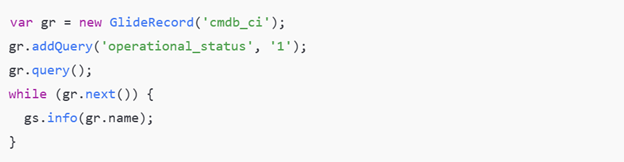
    Example of querying predicted outage risk.

    eee29686-4c83-4a95-b079-255c8c758240-image.png

    AI enriches this data with risk scores. Automation then triggers preventive workflows.

    3. Hyperautomation Through Flow Designer

    Automation defines the ServiceNow future. Flow Designer replaces complex scripting for many tasks. AI improves flow decisions. It selects paths based on probability. Hyperautomation combines RPA, AI, and workflows. ServiceNow integrates bots with platform logic.

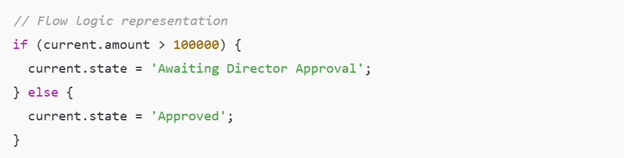
    A simple approval flow example.

    d313b2ed-86ff-48c3-b2c3-d4a52d6fd5f4-image.png

    AI can replace fixed thresholds. It learns approval patterns. It predicts approval likelihood. It routes tasks dynamically. A ServiceNow Course provides structured learning on ITSM, automation, and platform configuration for real business use cases.

    4. Conversational AI and Virtual Agents

    Virtual agents represent a visible AI future. Users prefer chat interfaces. ServiceNow virtual agents answer questions instantly. They resolve issues without human help. They connect to knowledge bases and workflows.

    Natural language understanding improves continuously. The agent understands context and follow-up questions. It performs actions instead of giving static replies.

    Example of triggering a request via conversation.

    03eb640b-4f81-4877-a5c4-c12ccdfa208b-image.png

    The user never fills a form. The agent collects data through chat. Automation completes the request.

    5. AI-Driven IT Service Management

    ITSM gains strong intelligence. Incident management becomes predictive. Problem management becomes analytical. Change management becomes safer.

    AI analyzes change history. It predicts failure probability. It suggests optimal change windows. It reduces outages caused by poor planning.

    Example of an automated change risk check.

    a8c2dedd-9f0c-4851-b8e1-2a25f4e5a1ca-image.png

    Future versions auto-calculate this risk using AI models. Automation blocks risky changes.

    6. Expansion Into Business Functions

    ServiceNow moves beyond IT. AI enables HR case resolution. It improves employee experience. It automates onboarding tasks. It personalizes responses.

    Customer service workflows gain sentiment analysis. AI detects frustration in messages. Automation escalates cases faster.

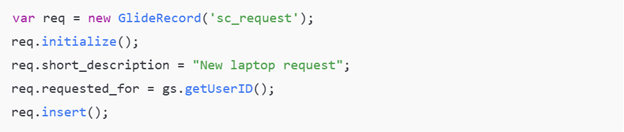
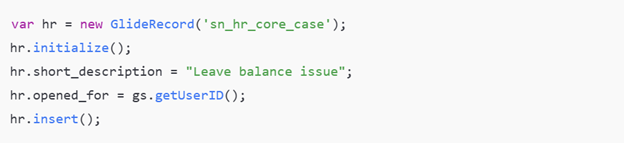
    Example of HR case creation.

    67032a94-0550-4744-8db4-55834df58d38-image.png

    AI suggests answers by referencing past cases. Automation helps resolve routine queries.

    7. Low Code Development With AI Assistance

    The future favours low code. AI assists developers. It recommends fields and tables. It generates scripts. It validates logic.

    Citizen developers build apps faster. AI prevents bad design. It enforces best practices.

    Example of table access control script.

    29b82999-e3a9-454d-9dc7-5ecffffd58c0-image.png

    AI explains the impact. It warns about security gaps. ServiceNow Training in Hyderabad offers hands-on exposure with local industry projects and expert guidance.

    8. Governance, Trust, and Responsible AI

    ServiceNow focuses on responsible AI. Enterprises demand transparency. AI decisions must be explainable. The platform logs predictions and actions.

    Access control remains strict. AI respects roles and data boundaries. Automation follows audit rules.

    Future AI includes continuous monitoring. It detects bias in models. It adapts responsibly.

    9. Integration With External Automation

    ServiceNow integrates with cloud and DevOps tools. AI correlates data from multiple systems. Automation orchestrates end-to-end workflows.

    Example of REST integration.

    4e71cf6c-a269-4ed1-8941-dcad7e8f2743-image.png

    AI interprets responses. Automation decides next steps.

    Conclusion

    ServiceNow’s integration with AI and automation leads to intelligent and proactive company operations. The ServiceNow Administrator Course offers ample hands-on training opportunities for aspiring professionals.  The platform shifts from workflow execution to decision support. AI enhances understanding of data and intent. Automation removes delays and errors. ServiceNow becomes a digital brain for enterprises. Developers focus on value instead of manual logic. Developers can use smarter and faster devices with ServiceNow. When combined with AI and automation, ServiceNow is the technology potent to revolutionise the industry.


  • What is the Role of ServiceNow in Green Digital Transformation in 2026?
  • V vikashagarwal

    Introduction

    In today’s digital world, being a successful business means more than just making a profit. In the year 2026, it is about the companies that can grow digitally while taking care of the planet. This is called Green Digital Transformation, which is a part of ServiceNow. Well, most people think that ServiceNow is just a way through which one can handle IT tickets or fix system issues.

    But this has grown into something bigger, which helps the global companies in tracking the carbon footprint, reducing waste, and meeting the environmental goals. In this article, we have discussed in detail the role of ServiceNow in detail. Well, if you are looking to become a ServiceNow developer, then taking the ServiceNow Training in Hyderabad can help in this. This training in Hyderabad can help you learn from professionals with years of knowledge. So let’s begin discussing the meaning of the Green Digital Transformation.

    What Exactly is Green Digital Transformation?

    Green Digital Transformation is using smart technology to solve environmental problems. It is about making sure that a company becomes tech-based and also becomes greener. Well, it also includes reducing the electricity use, reducing e-waste, and making sure that suppliers are also following all the eco-friendly rules.

    The biggest problem for companies today is that they have various "green goals," but they don't have the data to see if they are actually reaching them. Such information about energy and waste is hidden in the spreadsheets or different departments. ServiceNow changes this by putting all that information in one easy-to-see place. Taking the ServiceNow Training can help you understand how ServiceNow makes this possible, and everything is easy.

    How ServiceNow Makes a Difference?

    ServiceNow helps companies become more sustainable in three main ways: Visibility, Automation, and Accountability. If you have to take ServiceNow classes, this may help you understand these things clearly and understand how ServiceNow is making a difference.

    1. Focusing on ESG Management:

    ServiceNow has a special part called ESG Management (Environmental, Social, and Governance). Due to this, people do not need to type everything about how much electricity a building uses. The system will automatically gather the data from the sensors and utility bills.

    Real-time Information:

    Managers can look at a screen and see exactly how close they are to their "Net Zero" targets right now, not just at the end of the year.

    Audit-Ready Data:

    When it’s time to show the government or investors that the company is being green, ServiceNow provides a clear, honest report that is ready to be checked.

    2. Making IT "Greener":

    Computers, servers, and data centers use a massive amount of power. ServiceNow helps clean up this "IT footprint" through its asset management tools. One can make effective use of these tools if they have learned them in the ServiceNow Course and can apply their expertise.

    Reducing E-Waste:

    The system will keep a track of every laptop as well as phone from the day it is brought, and until it is recycled. It can help make sure that the devices are not thrown away too early, as well as disposed of safely.

    Cloud Cleaning:

    Many companies pay for cloud servers they don't even use. ServiceNow finds these "zombie servers" and shuts them down, which saves money and stops wasting electricity.

    3. Checking on Suppliers:

    A company isn't truly green if the people it buys from are polluting the environment. This is often the hardest part to track, but ServiceNow makes it simpler. It can automatically send surveys to suppliers and give them a "green score." If a supplier isn't meeting the rules, the system flags them so the company can find a better partner.

    The Power of AI in Going Green

    In the year 2026, ServiceNow has also added some of the smart AI features that can help the planet. AI will operate the system, such as AC, TV. For ex. In any office, if the AC is on even if everyone is working from home, then AI will talk with the building’s cooling system and turn it off to save power. No human has to remember to do it; the "Green Workflow" handles it on its own.

    Well, completing the ServiceNow Admin Certification Training can add a credential to your portfolio for any IT professional who wants to master the platform's core configuration and management capabilities. One can showcase this certification to get the dream job they have been seeking for years.

    Conclusion:

    Green Digital Transformation is no longer just a trend; it has become a requirement for staying in business. It is a bridge that connects high-tech digital work with real-world environmental care. This is also helping the businesses to grow without hurting the planet. The path to a greener future is complicated, but with the right tools, it is possible. ServiceNow is proving that the best way to work is not just to work faster, but to work in a way that protects our world for the future.


  • What is the "Clean Core" Strategy in SAP ABAP?
  • V vikashagarwal

    For many years, SAP ABAP has been used in different kinds of businesses. But there are some problems that are arising, which are making the development of businesses slow due to repetitive activities. This activity is about taking a standard piece of software and rewriting parts of it to fit their specific needs. This has worked in the beginning, but when the time came to move to a newer, faster version, they got stuck.

    This is where the role of the "Clean Core" Strategy began. It is one of the most important moves in SAP Development in twenty years. So if you are a business owner or a developer in the year 2026, understanding this has become a requirement for survival. If you are looking to become a SAP ABAP developer, then taking the SAP ABAP Online Training can help in this. This online training will equip you with the skills that you need to use SAP ABAP. SO let’s begin by discussing what the "Clean Core" Strategy is:

    3612b9d0-84c4-439a-8dd7-33834dd5aa06-SAP ABAP Training.jpg

    What Exactly is a Clean Core?

    In the SAP ABAP, clean code is about keeping the standard SAP Code exactly as it was given. You won’t be able to modify the standard tables or the "out-of-the-box" programs. Instead of this, you have to build the custom features in a way that they are "decoupled" from the core.

    To learn more about how this works, one can apply for the SAP ABAP Training, where they will gain insight into its benefits for a business unit and why it is gaining popularity among users. So let’s discuss why everyone is talking about this:

    Why is Everyone Talking About This Now?

    The move to S/4HANA Cloud changed the rules. In the old days (ECC 6.0), you owned the servers and could do whatever you wanted. In the Cloud, SAP manages the updates. They might push a huge update every quarter. If you have modified the core code, that update will fail.

    The benefits of a Clean Core include:

    Lower Maintenance Costs:

    You don't have to spend weeks testing your customizations every time there is a patch.

    Innovation Speed:

    You can toggle on new SAP features (like AI or advanced analytics) instantly.

    Scalability:

    It is much easier to expand your business to new countries when your system follows a standard global template.

    The Three Pillars of the Clean Core Strategy:

    Currently, SAP Developers are using the three specific methods that can help build custom features. If you are looking to implement the Clean Core strategy in your business, then you need to know the basic SAP ABAP as well as these three Pillars. Taking the SAP ABAP Training in Gurgaon is helpful for beginners.

    A. On-Stack Developer Extensibility

    This is for when you need to build something that lives inside the SAP system but doesn't touch the "messy" parts. You use a restricted version of ABAP called ABAP Cloud. You will be allowed to use the "Released APIs. where you won’t be able to use the things that SAP has not authorized, as the system will not let you do so. This guarantees that your code will never break during an upgrade.

    B. Side-by-Side Extensibility (SAP BTP)

    This is the "App Store" model. You build your custom application on the SAP Business Technology Platform (BTP). It sits outside the ERP system entirely and talks to SAP via APIs (like a phone talking to a server). This is perfect for building custom web portals or mobile apps for your employees.

    C. Key User Extensibility (No-Code/Low-Code)

    Sometimes, you don't need a developer at all. SAP now provides tools for "Key Users" (like a finance manager) to add a new field to a screen or change a report layout using a drag-and-drop interface. These changes are automatically "upgrade-safe."

    The Human Element: A Change in Mindset

    For the people who are using Clean Core, they face a problem that is psychological, not technical. Business users are used to saying, "I want this button to be blue and located in the top-left corner." In a Clean Core world, the answer is often, "The standard SAP button is gray and in the top-right. Using the standard will save us $50,000 in future upgrade costs. Is the blue button really worth $50,000?"

    In the year, the best SAP architects are those who can negotiate with the business leaders to make them accept "Standard" whenever possible. This focuses on reserving custom code only for those things that offer a genuine competitive advantage.

    Well, if you have gained the SAP ABAP Certification, then you can show this certification to your potential employers to prove your skills in this field. This is how, whenever you apply to any of the companies, you may let them build a custom feature and rebuild it by using ABAP Cloud.

    Conclusion:

    From the name "Clean Core," it may sound like there is a limit in creativity, but it is the opposite of this. Well, this spends less time fixing the broken code from ten years ago and makes the developers work freely on the things that actually matter, which are AI integration, current data, and better user experiences. Also, this ensures that your technology will remain an engine for growth.

  • Login

  • Don't have an account? Register

Powered by NodeBB Contributors
  • First post
    Last post
0
  • Categories
  • Recent
  • Tags
  • Popular
  • Users
  • Groups